


Unhappy?

Depressed?

Lost?

Procrastinating?

Take Action Now!

Thrive!

The Secret Buddha Happy Life Institute

Do you want to dramatically increase your happiness and health? Overcome depression and physical ailments such as chronic backache?

Dramatically improve the quality of your life? Make it worth living again; do you want to live?

Astoundingly, this is really possible, even if you don’t believe it right now. It is. Many people turn around their lives. It may take time and effort, but you could even start enjoying the time and effort it takes, and over time you may realise that it is a lifelong journey, and you may revel in it!

Change Now.


Core Resource 1.

Literary Collection


Core Resource 2.

Diary-X Social Network


Core Resource 3.

Our AI Advisor

Core Resource 1.

Literary Collection.

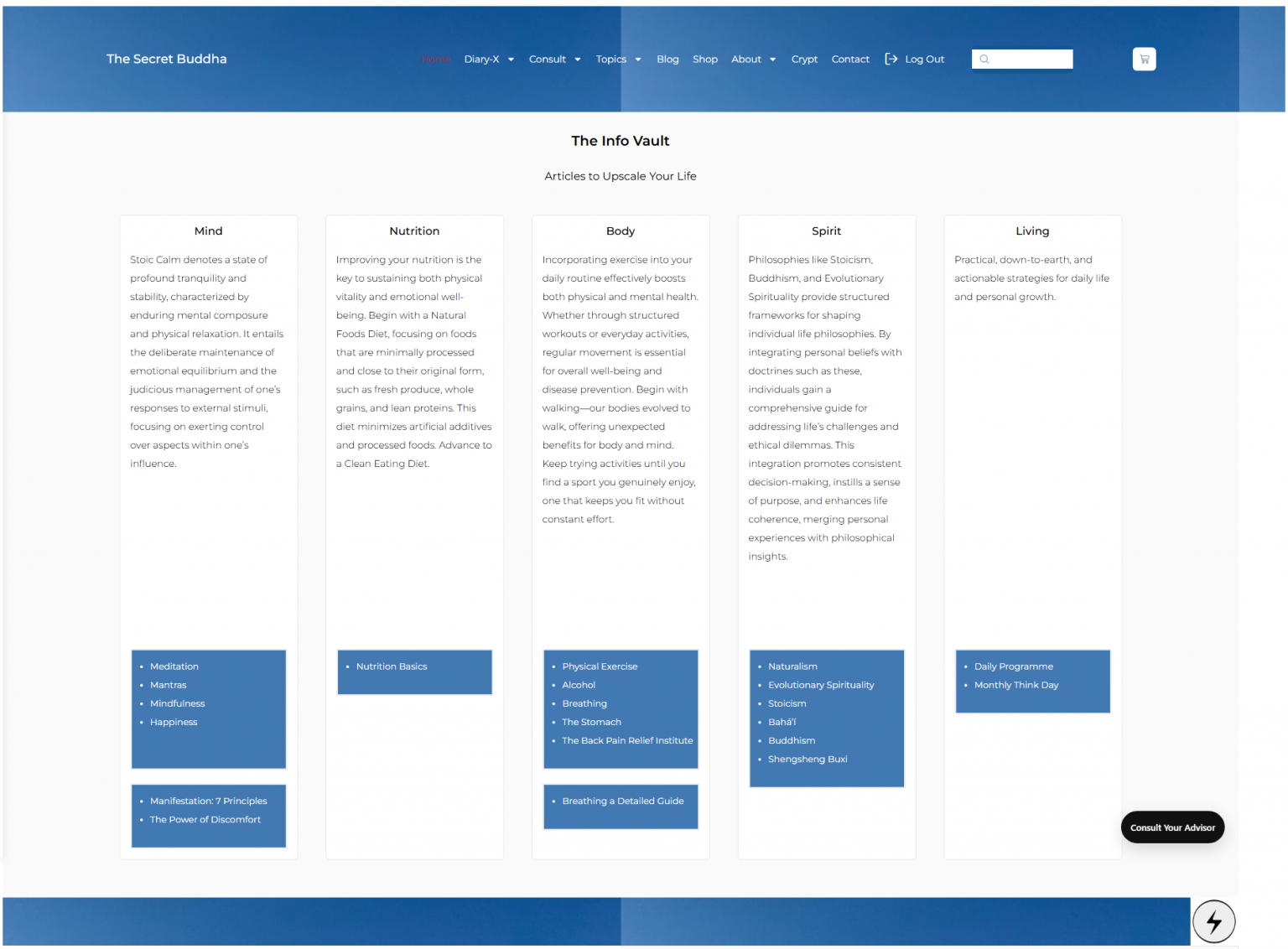
The Info Vault

Articles to Upscale Your Life

Stoic Calm denotes a state of profound tranquility and stability, characterized by enduring mental composure and physical relaxation. It entails the deliberate maintenance of emotional equilibrium and the judicious management of one’s responses to external stimuli, focusing on exerting control over aspects within one’s influence.

Improving your nutrition is the key to sustaining both physical vitality and emotional well-being. Begin with a Natural Foods Diet, focusing on foods that are minimally processed and close to their original form, such as fresh produce, whole grains, and lean proteins. This diet minimizes artificial additives and processed foods. Advance to a Clean Eating Diet.

Incorporating exercise into your daily routine effectively boosts both physical and mental health. Whether through structured workouts or everyday activities, regular movement is essential for overall well-being and disease prevention. Begin with walking—our bodies evolved to walk, offering unexpected benefits for body and mind. Keep trying activities until you find a sport you genuinely enjoy, one that keeps you fit without constant effort.

Philosophies like Stoicism, Buddhism, and Evolutionary Spirituality provide structured frameworks for shaping individual life philosophies. By integrating personal beliefs with doctrines such as these, individuals gain a comprehensive guide for addressing life’s challenges and ethical dilemmas. This integration promotes consistent decision-making, instills a sense of purpose, and enhances life coherence, merging personal experiences with philosophical insights.

Practical, down-to-earth, and actionable strategies for daily life and personal growth.

Focus on:


Nutrition
| Movement | Equilibrium | Community | Spirituallity | Nature

Where to Start?

Alcohol | Nutrition | Movement | Happiness | Equanimity | Believe

ALCOHOL

Quit alcohol or limit your consumption to occasional, small quantities. Sorry.

NUTRITION

“The food you eat can be either the safest and most powerful form of medicine or the slowest form of poison.” – Ann Wigmore

MOVEMENT

“Movement is medicine for creating change in a person’s physical, emotional, and mental states.” – Carol Welch

HAPPINESS

Happiness doesn’t simply arise from external events. It’s a choice you must actively make. Decide whether you want to be happy or not today!

EQUANIMITY

Embrace relaxation for both mind and body. Whether through meditation, yoga, mindfulness, walking, or any method that resonates with you, focus on bringing calm and peace to your entire being.

BELIEVE

Find something to believe in, something you can live for, whatever gives your life meaning. A philosophy like Stoicism, a sport or lifestyle like surfing—something worth your time and energy that helps you grow and teaches you to live a healthy, positive life, something that gives you a point of orientation.

Definition: Transient Hypofrontality

Transient Hypofrontality refers to a temporary reduction in activity within the prefrontal cortex, which is associated with higher cognitive functions such as planning and decision-making. This neurophysiological condition reallocates cognitive resources to enhance sensory and motor processing, often facilitating states of flow and immersion during intense physical or creative activities. This is what athletes and others call “being in the flow.”

a pair of scissors and a heart on a blue cloth

Chocolate Addiction

FULL ARTICLE Essentials Only FULL ARTICLE   SUGAR AND CHOCOLATE ADDICTIONWhat it is, why it happens, and how to overcome it 1. What people mean by sugar or chocolate addiction When people say “I am addicted to chocolate,” they usually mean a cluster of experiences that resemble compulsive use patterns rather than a formally diagnosed substance addiction. Common experiences • Strong cravings that feel urgent and hard to ignore• Repeated loss of control, for example intending to eat a little and eating far more• Compulsive patterns, for example buying it even after deciding not to, or eating it in secret• Continued use despite clear downsides, such as weight gain, reflux, acne, low energy, poor sleep, money spent, or dental issues• Withdrawal like symptoms when trying to stop, such as irritability, restlessness, headaches, or low mood Clinical reality and the research framing“Sugar addiction” is not a standalone diagnosis in major diagnostic

Read More »

Literary Collection

Social Media Network

Our Consultant

Existentialists is a philosophical movement that emphasizes individual existence, freedom, and choice. Existentialists believe that individuals are responsible for creating their own meaning and purpose in life, as opposed to relying on external sources such as religion or societal norms. Key concepts in existentialism include:

1. Existence precedes essence: Existentialists assert that individuals exist first and then define themselves through their actions and choices.

2. Freedom and responsibility: Existentialists emphasize the freedom of individuals to make their own choices, but also highlight the responsibility that comes with this freedom. They believe that individuals must take responsibility for their actions and their impact on the world.

3. Anxiety and authenticity: Existentialists often discuss the experience of anxiety that arises from the awareness of one’s freedom and responsibility. They advocate for authenticity, which involves being true to oneself and living in accordance with one’s own values and beliefs.

4. Absurdity: Existentialists contend that the universe is inherently meaningless, and that individuals must create their own meaning in a world that lacks inherent purpose or order.

5. Authenticity: Existentialists encourage individuals to live authentically by making choices that align with their true selves, rather than conforming to societal expectations or external influences.

Overall, existentialism emphasizes the importance of individual experience, choice, and responsibility in creating meaning and purpose in life.